


Now that you have a solid grasp of your daily macronutrient requirements, which micronutrients are commonly lacking, and which ones carry a risk of toxicity if overconsumed, it is time to address the “how.”
When it comes to filling those nutritional gaps, dietary supplements are undoubtedly the most convenient solution. In fact, for many fitness enthusiasts, the very first supplement they reach for isn’t Creatine or L-Carnitine—it’s a Multivitamin.
This choice makes sense. Intense exercise leads to the loss of various minerals through sweat, and the body may require additional vitamins to support the increased demands of protein synthesis.
In today’s article, we’ll start with multivitamins and walk you through exactly how to select daily dietary supplements that actually work.
Multivitamins
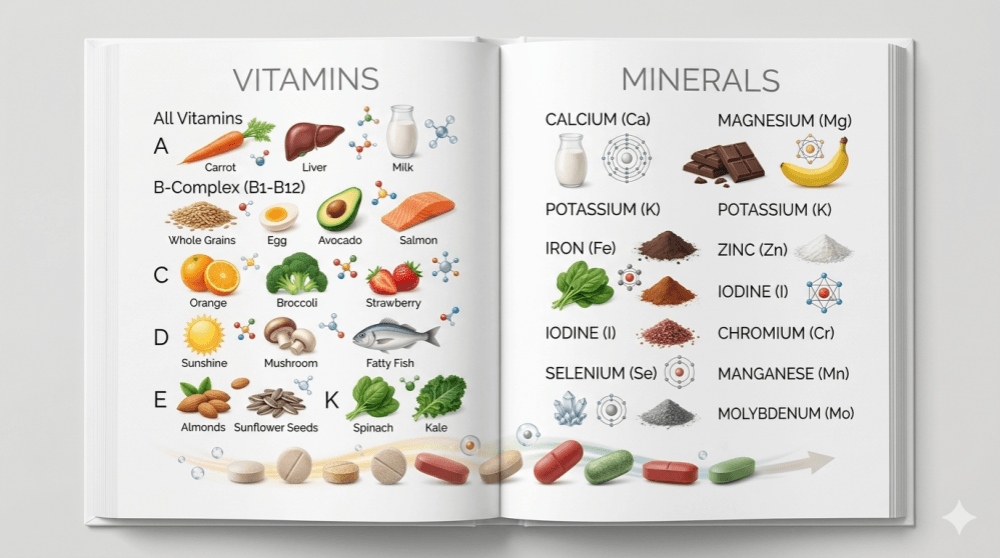
A standard multivitamin typically contains a full spectrum of vitamins along with several minerals that are most likely to be deficient in a modern diet.
These usually include macrominerals—primarily Calcium, Magnesium, and Potassium—as well as trace minerals like Iron, Zinc, Iodine, Selenium, Chromium, Manganese, and Molybdenum.
How to Choose the Right Multivitamin
Now, let’s get to the heart of the matter. While almost every multivitamin on the market claims to provide these essentials, they are far from equal. There is a clear hierarchy of quality.
High-quality multivitamins typically use natural forms of vitamin raw materials. These forms possess higher bioavailability, which simply means your body can absorb them more efficiently without running into “absorption roadblocks.”
In contrast, budget-friendly multivitamins often rely on synthetic forms. This forces your body to first process and convert these materials—usually through the liver or other metabolic pathways—before they can even be utilized.
To give you a clearer picture, please see the comparison below highlighting common vitamin forms (Note: These examples of premium vs. synthetic sources are illustrative and not exhaustive):
| Vitamin Name | Premium Form (High Bioavailability) | Basic/Synthetic Form (Lower Cost) | Key Differences & Advantages |
| Vitamin E | Natural d-alpha-tocopherol (RRR-alpha) | Synthetic dl-alpha-tocopherol (all-rac) | Natural form has 2x higher bioavailability and stays longer in the liver. |
| Vitamin B12 | Methylcobalamin / Adenosylcobalamin | Cyanocobalamin | Active forms are directly utilized; Cyanocobalamin needs cyanide removal by the liver. |
| Folic Acid (B9) | L-Methylfolate (5-MTHF) | Folic Acid (Synthetic) | Methylfolate is directly absorbed, bypassing MTHFR gene mutation issues. |
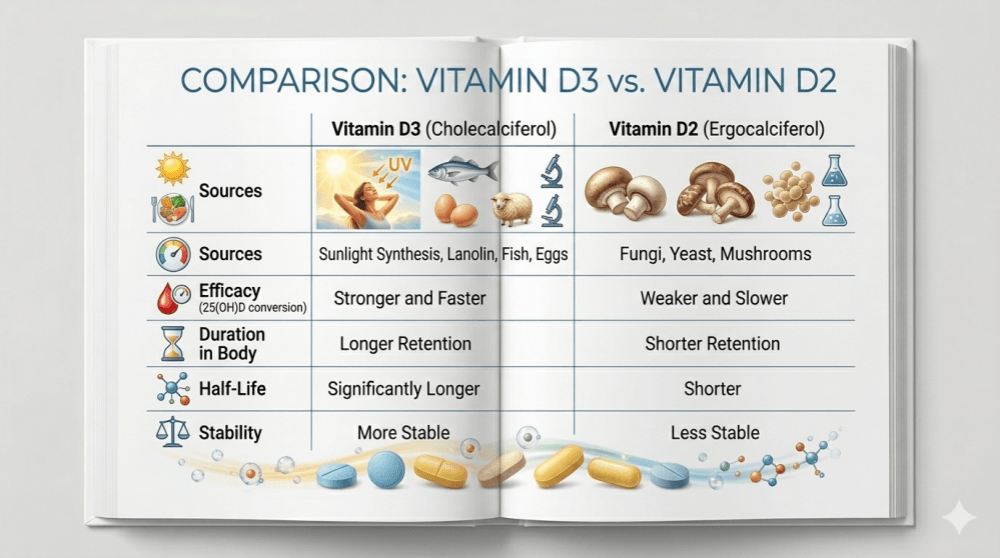
| Vitamin D | Vitamin D3 (Cholecalciferol) | Vitamin D2 (Ergocalciferol) | D3 is significantly more effective at raising and maintaining blood levels than D2. |
| Vitamin C | Buffered Vitamin C (e.g., Calcium Ascorbate) | Ascorbic Acid | Buffered forms are non-acidic and gentle on the stomach; less gastric reflux. |
The same logic applies to mineral sources. Superior raw materials not only offer higher absorption rates and less gastrointestinal irritation but may also provide additional benefits depending on the specific formulation.
| Quality Tier | Representative Forms | Absorption & Utilization | Gastric Tolerance |
| High-End | Amino Acid Chelates (Albion™, TRAACS®), Active B-Vitamins | Very High | Excellent (Very Gentle) |
| Mid-Range | Organic Salts (Citrates, Malates, Lactates, Gluconates) | Good | Good |
| Basic | Inorganic Salts (Oxides, Sulfates, Carbonates) | Lower | Poor (May cause discomfort/diarrhea) |
In short, if you see vitamins in their natural forms or minerals listed as chelates or organic salts, you are likely looking at a high-tier product.
Of course, price is often a direct indicator of quality. Premium raw materials inevitably mean higher production costs, which is why better multivitamins generally carry a higher price tag.
I know what you’re thinking—spending a premium on supplements might feel unnecessary. However, I believe that if you’ve already committed to taking supplements, choosing products that your body can actually absorb is the only way to ensure you aren’t just “throwing money down the drain.”
Decoding Daily Value (DV)
Once you understand the difference in raw materials, it’s time to look at the Daily Value (DV).
If you look closely at a supplement label, you’ll notice that many vitamins and minerals are listed at over 100% of the DV—some even reaching 2,000%.
This is because the DV is established as a “baseline” or a minimum threshold. Considering the nutrient loss that occurs during processing and the varying rates of absorption, manufacturers typically over-fortify the content to ensure efficacy.
In reality, as long as your intake does not exceed the Tolerable Upper Intake Level (UL), you are safe. The DV is, by design, significantly lower than the UL.
However, here’s an interesting catch: some minerals in multivitamins are present at very low levels—often around only 5% of the DV. These include Calcium, Magnesium, and Potassium.
Why is this? These are macrominerals, meaning the body requires them in amounts exceeding 100mg per day. Because the raw materials for these minerals are physically bulky, including 100% of the DV in a single multivitamin would make the pill or capsule far too large to swallow.
This is precisely why certain minerals often need to be supplemented separately.
Calcium Supplements
The Recommended Dietary Allowance (RDA) for Calcium in adults ranges from 700mg to 1,300mg. If your daily diet excludes dairy, there is a high probability that you are deficient.
Even if you drink 200–300ml of milk daily, you might still fall short. Given that 100ml of milk contains roughly 120–160mg of calcium, relying on milk alone won’t necessarily meet your total daily requirement.
The most common forms of calcium supplements are Calcium Carbonate and Calcium Citrate, with Carbonate being the most prevalent.
The reason is simple: Calcium Carbonate is dense, providing a relatively high amount of elemental calcium by volume (about 40%), and it is inexpensive. However, the downside is significant: it requires stomach acid for digestion and absorption, which may not be ideal for those with sensitive stomachs.
Calcium Citrate, on the other hand, does not have this limitation. It is not dependent on stomach acid, which is why it is steadily becoming the mainstream choice despite being more expensive and providing less elemental calcium per dose (about 21%).
There are also advanced products that include additional functional components, such as Calcium Aspartate (Calcium + Aspartic Acid) or Microcrystalline Hydroxyapatite (MCHC). Theoretically, these offer even better absorption rates than standard carbonate or citrate.
However, in my view, Calcium is unique. Because its absorption is heavily influenced by external factors—such as Vitamin D levels, protein intake, and whether or not you are performing resistance training—ensuring a sufficient total intake is far more important than obsessing over which specific form of calcium you choose.
Vitamin D Supplements
As mentioned, Vitamin D is crucial for calcium absorption, so it deserves its own spotlight.
Currently, the two mainstream forms are Vitamin D3 (Cholecalciferol) and Vitamin D2 (Ergocalciferol).
To keep it simple: always go with Vitamin D3. I only mention D2 here so you know what to avoid.
Referencing our previous discussion, please remember that long-term, excessive Vitamin D supplementation can lead to side effects like hypercalcemia. Therefore, monitoring your dosage is vital.
For adults, the RDI (Recommended Dietary Intake) for Vitamin D is 15–20µg (600–800 IU), while the UL (Tolerable Upper Intake Level) is 63–100µg (2,500–4,000 IU).
Magnesium Supplements
The grand finale has arrived. If you’ve ever searched for calcium products, you have undoubtedly come across “Calcium-Magnesium” tablets. Likewise, if you are part of the fitness community, you’ve almost certainly heard of ZMA (Zinc + Magnesium + Vitamin B6).
Why is magnesium so frequently paired with other nutrients? The reason lies in how fundamental and vital magnesium is to the human body.
As a macromineral, multivitamins typically cannot provide a sufficient dose of magnesium due to its physical volume. Consequently, much like calcium, magnesium often requires separate supplementation. However, while calcium is more about ensuring “total intake” rather than the specific form, with magnesium, the form of the supplement matters immensely.
Magnesium Oxide
Let’s start with Magnesium Oxide. This is currently the most common and inexpensive form of magnesium found on the market, characterized by a very high magnesium content by weight. However, its flaw is glaring: it has an incredibly low absorption rate—so low, in fact, that it can be considered a “low-grade” magnesium source.
A bit of “insider knowledge”: Magnesium Oxide is actually used as a laxative.
Therefore, when choosing a supplement, always check if it is Magnesium Oxide and consider your own digestive tolerance.
Magnesium Citrate
Magnesium Citrate is another mainstream option and is often found in “complex” magnesium products alongside magnesium oxide. Because it is bound with citric acid, it is more water-soluble and easier for the intestines to absorb.
That said, it does have a “side effect.” Because citrate salts draw more water into the intestines, high doses of Magnesium Citrate can still lead to diarrhea.
Magnesium Glycinate
This is currently the most highly-rated magnesium supplement available. This reputation comes from two main factors: first, as an amino acid chelate, its absorption rate is exceptionally high and it is very gentle on the stomach.
Second, while magnesium itself helps relax nerves and muscles, Glycine also has a calming effect on the central nervous system and helps lower core body temperature. This makes Magnesium Glycinate the premier choice for improving sleep quality or alleviating anxiety.
Keep in mind, I’m not suggesting that Magnesium Glycinate acts like a powerful sedative or matches the direct sleep-inducing effects of melatonin. Always remember that magnesium is a “foundational” element involved in hundreds of metabolic and enzymatic reactions, rather than a single-function targeted nutrient.
Magnesium Aspartate
If you’ve ever purchased ZMA, you’ll find that the magnesium used is typically Magnesium Aspartate.
Aspartic acid is a non-essential amino acid that plays an indirect role in energy and nitrogen metabolism. Early sports nutrition theory suggested that the “Zinc + Magnesium Aspartate” combo could “boost testosterone, enhance recovery, and improve sleep.”
However, subsequent research found that aspartic acid does not actually improve athletic performance, nor does Magnesium Aspartate offer the noticeable experiential benefits found in the glycinate form. While its absorption as an amino acid chelate is better than oxide, it still falls short of glycinate. As a result, Magnesium Aspartate has largely “fallen from grace” in modern discussions.
Regarding ZMA, a quick side note: I’ve seen many articles over-hyping its “magical” effects. The truth is, if your body isn’t already deficient in zinc and magnesium, ZMA will do almost nothing for you. If you feel it’s a “god-tier” supplement, it’s likely because you were deficient in those minerals to begin with.
Magnesium L-Threonate
This form has gained massive popularity in the last couple of years, primarily due to studies claiming it can increase magnesium concentrations in the brain. However, there are two “traps” you should be aware of:
- The claim that it “boosts brain magnesium levels” has primarily been observed in animal studies; the evidence for humans isn’t quite as definitive yet.
- The actual magnesium content in L-Threonate is extremely low.
The Recommended Dietary Allowance (RDA) for magnesium in adults is 80–400mg, while the Tolerable Upper Intake Level (UL) specifically for supplements is 65–350mg.
Please take a look at the comparison below when you browse a shopping site: most magnesium products provide 100mg or 200mg per serving. Magnesium L-Threonate products, however, will often advertise “1,000mg of Magnesium L-Threonate,” which actually only yields about 72mg of elemental magnesium.
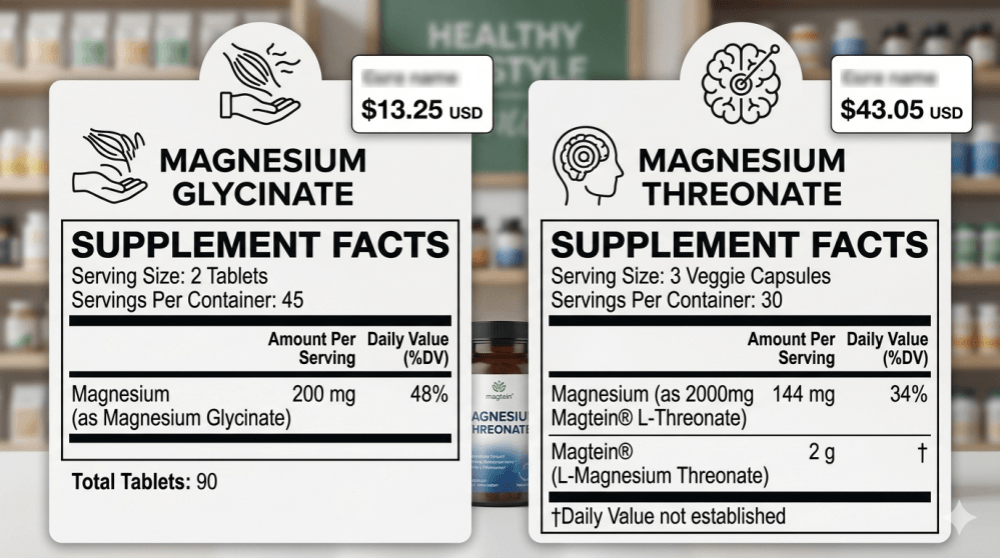
If you look at the price, you’ll find that to get the same dose of magnesium, L-Threonate can cost 2 to 3 times more than other forms. Remember: regardless of which form you choose, you are supplementing magnesium, not the “carrier.” If you are more interested in the specific benefits of the carrier itself, you should search for that specific ingredient as a standalone product.
Other Amino Acid Chelates
Beyond the five mentioned above, you may see others like Magnesium Lysinate, Taurate, or Arginate.
Essentially, these are all “Magnesium + Amino Acid” chelates. In addition to improving absorption and reducing stomach irritation, they do offer slightly different functional directions:
- Magnesium Lysinate is often linked to tissue repair.
- Magnesium Arginate can assist in Nitric Oxide (NO) synthesis.
As I mentioned before, since these are marketed as “magnesium supplements,” the actual amino acid content is quite low, meaning their extra functional benefits are limited. You can certainly choose a form that aligns with your goals, but your primary considerations should always be price, absorption, and actual magnesium content.
Due to the length of this topic, we will focus on sports-specific performance supplements in our next article. If you found this guide helpful, feel free to bookmark our site!
