

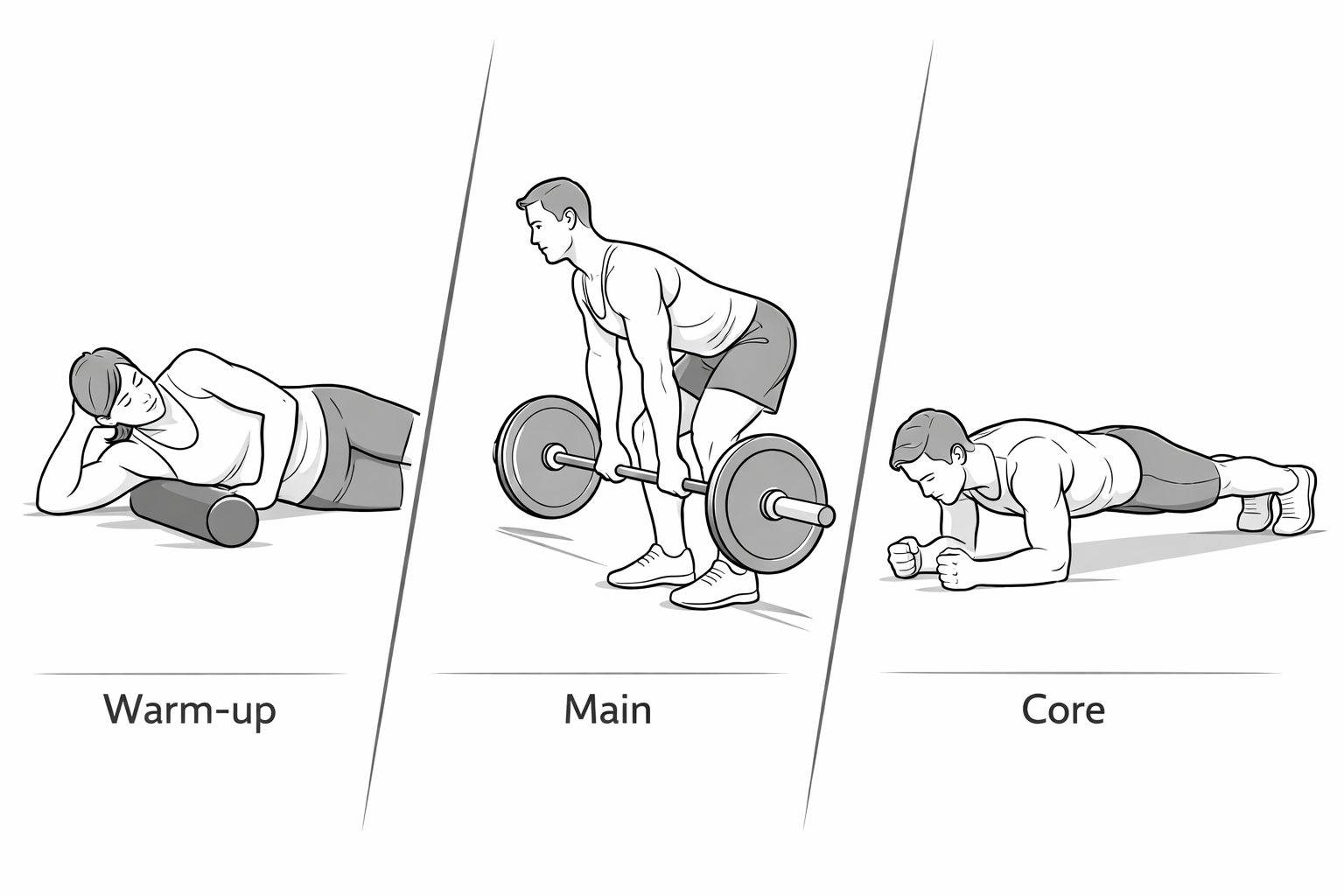
A beginner pull day workout focusing on back training for fat loss, with compound exercises, technique cues, and core stability work.
This is the third training session in our beginner fat loss series. We have previously introduced this trainee’s background and explained how the overall program was designed. Following a push / pull / legs split, today’s session focuses on pull movements, targeting the back muscles.
Due to the trainee’s current condition, no direct biceps exercises were included. After completing four back exercises, he was already unable to maintain proper form for additional strength work.
This situation is very common among beginners. In most cases, it is not caused by insufficient strength or poor cardiovascular fitness, but by a lack of familiarity with the movements. Since the body has never performed these exercises before, muscle coordination and movement patterns are not yet established, making everything feel extremely demanding.
The upside is clear: progress comes quickly. Within one to two weeks, noticeable improvements usually appear—not because strength suddenly increases, but because the muscles begin to “remember” the movements and execute them more efficiently.
Lower Back Discomfort: A Common Beginner Issue
During back training, we noticed that the trainee experienced lower back soreness. This is typically caused by two factors:
- Limited hip mobility
- Insufficient core strength
This point is critical. Many people assume lower back discomfort is due to a weak lower back. In reality, it is often the result of compensation caused by weaknesses in surrounding areas.
Therefore, instead of directly training the lower back, the priority should be strengthening these adjacent weak links. For this reason, we added plank holds to the end of this session.
Beginner Fat Loss Pull Day (Back) Training Plan
Warm-Up
Foam Roller Thoracic Extension
- 2 sets
- 20 reps
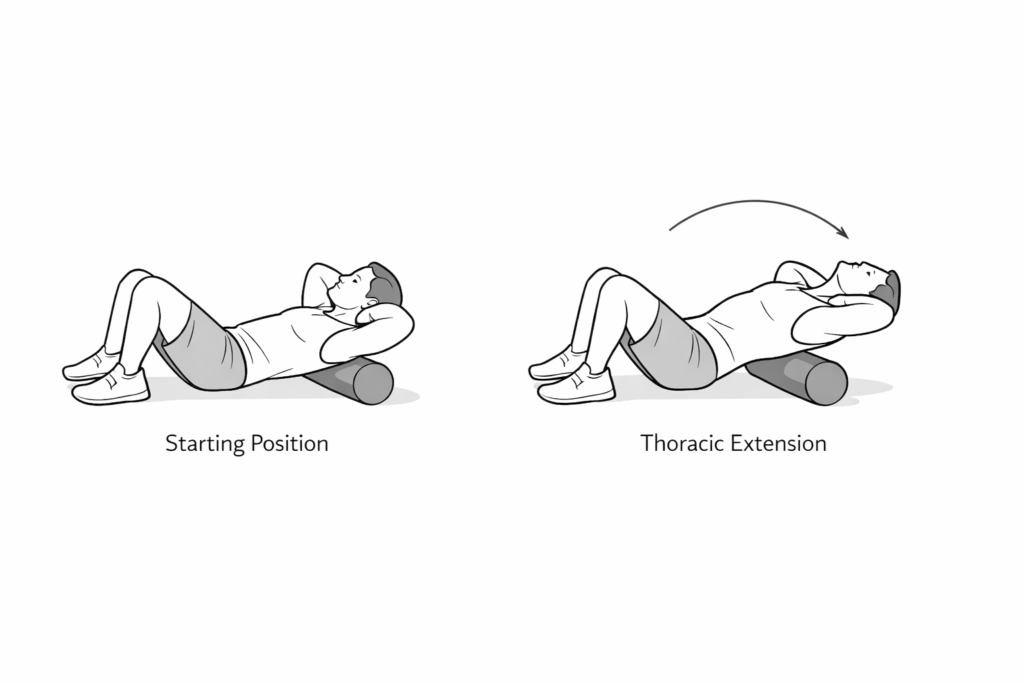
Use one set to target the upper back and one set for the lower back. Together, this helps prepare the entire back for training.
This movement is not only for muscle release—it also improves thoracic spine extension, which is essential for proper posture and pulling mechanics.
Lat Foam Roll
- 1 set
- 20 reps per side
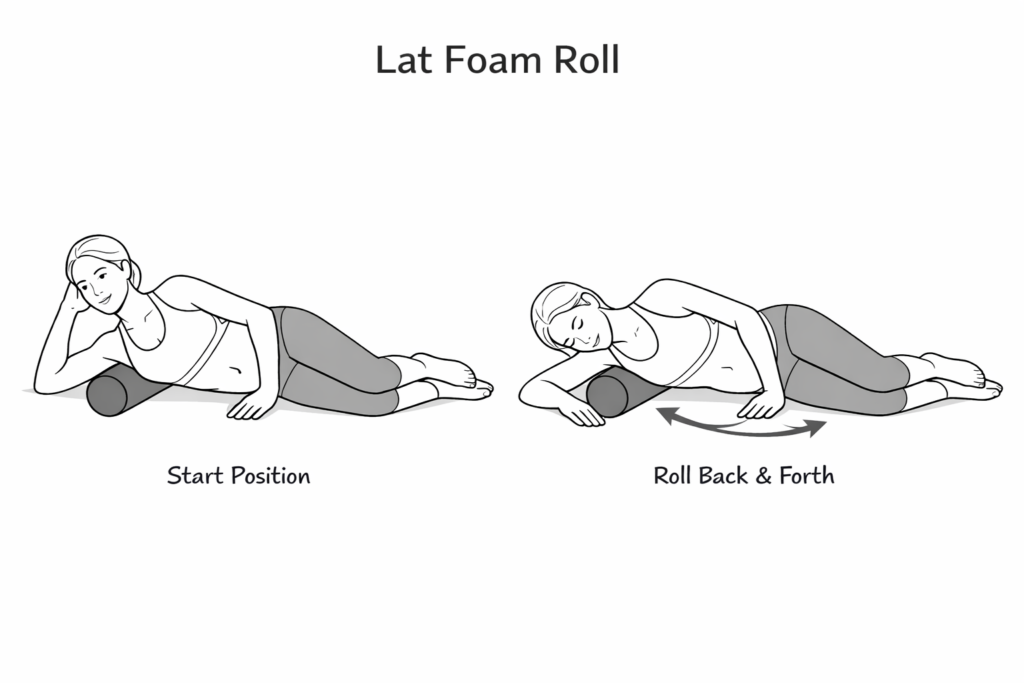
To release the latissimus dorsi, lie on your side with the arm extended overhead. Place the roller under the armpit and gently roll forward and backward.
Slowly move the roller downward along the side of the torso. When you find tight areas, pause briefly while continuing small rolling motions. Start near the armpit and work down toward the lower ribs.
For detailed demonstrations of these movements, refer to the exercise tutorials on 5-quick-foam-rolling-moves-to-alleviate-neck-shoulder-and-upper-back-pain/
Shoulder Pass-Throughs
- 1 set
- 20 reps
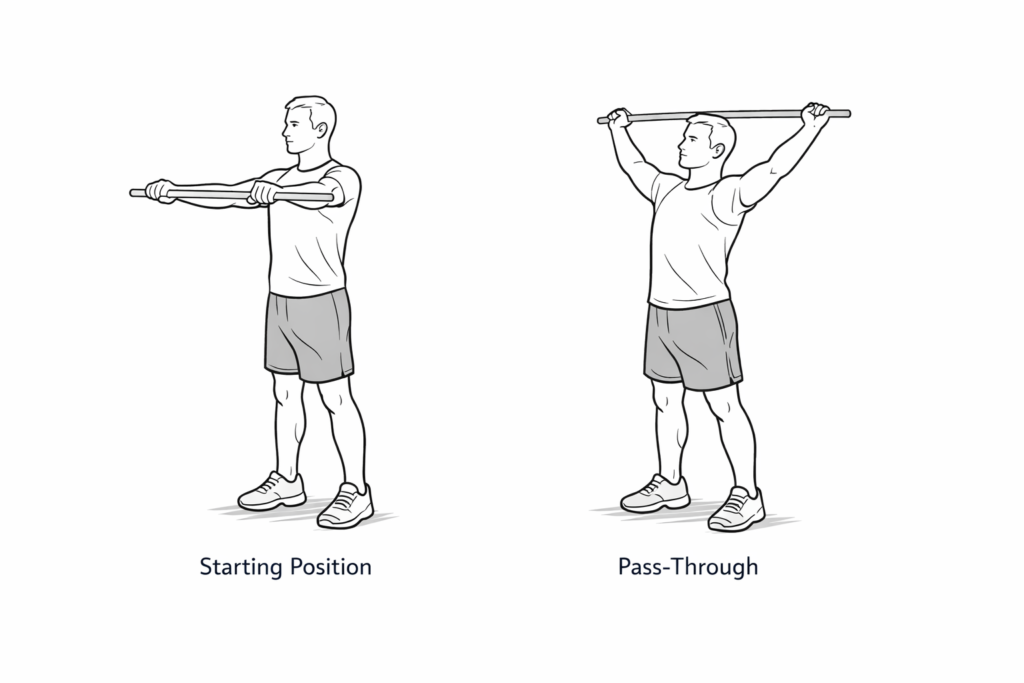
This movement has become increasingly popular in recent years. It is highly effective for improving shoulder mobility and relieving upper-body tightness.
You can perform it using a wooden stick or resistance band. (Just don’t use a barbell.)
Main Training
Romanian Deadlift
- 4 sets
- 8–10 reps
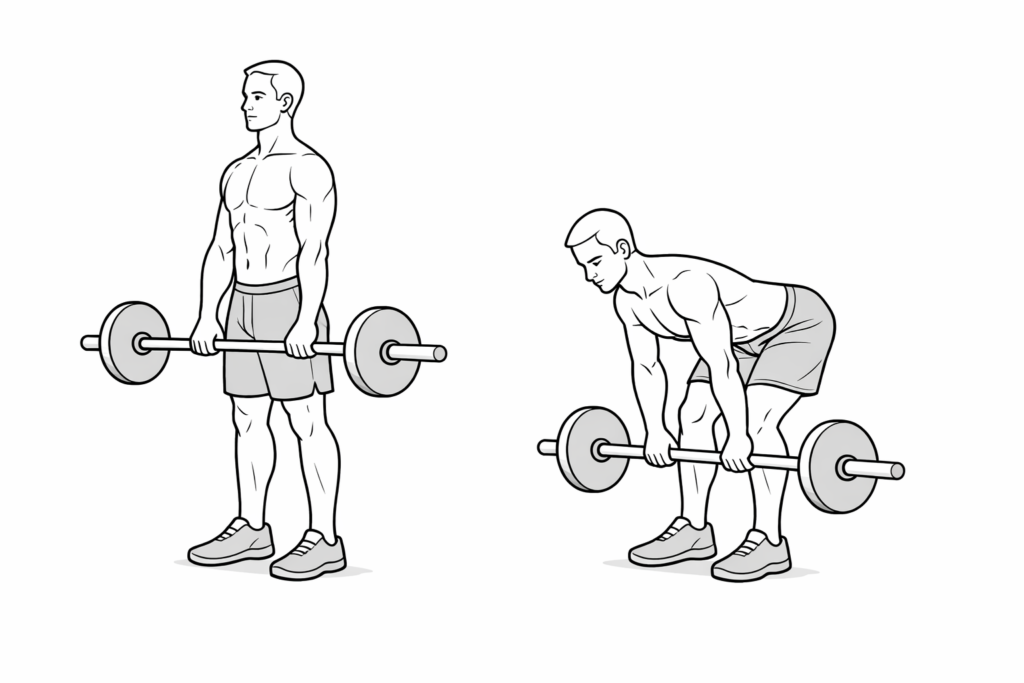
This is one of the most classic compound exercises and trains nearly the entire posterior chain. There is no reason to leave it out of a back program.
The key cue is simple: keep the back neutral throughout the movement. Avoid excessive rounding or arching of the lower back.
If hip mobility or weak core strength causes lower back discomfort, a trap bar deadlift can be used as an alternative.
Bent-Over Barbell Row
- 4 sets
- 10–12 reps
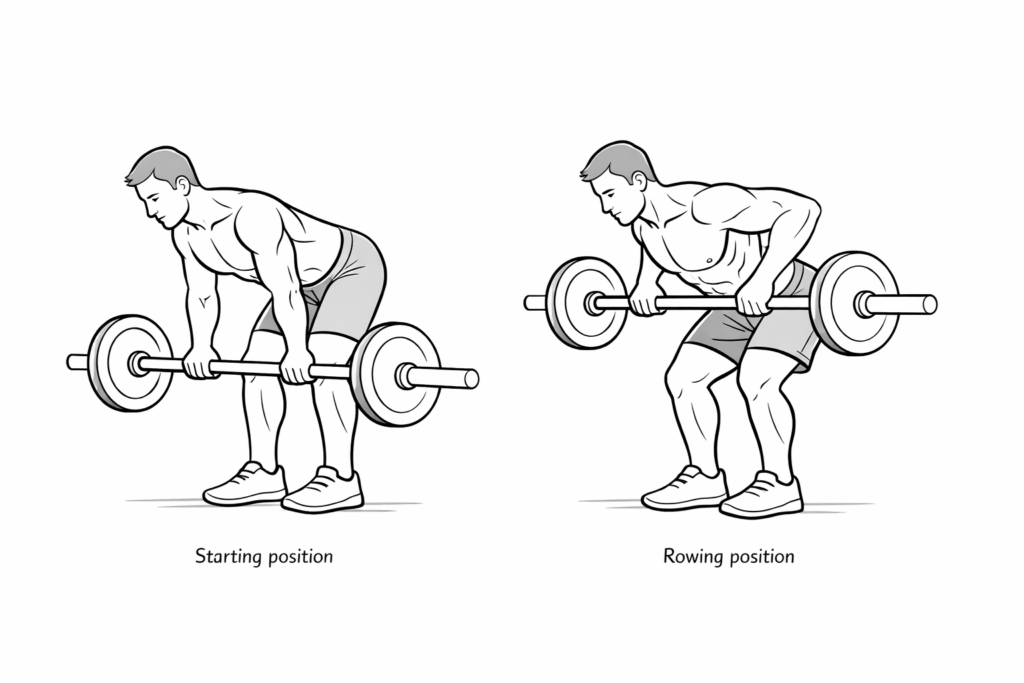
Another foundational compound back exercise. As with the deadlift, maintain a neutral spine and hinge at the hips rather than excessively leaning forward.
When pulling the bar, the arms should stay close to the thighs. Both overhand and underhand grips can be used. The underhand grip increases biceps involvement.
Seated Lat Pulldown
- 4 sets
- 10–15 reps
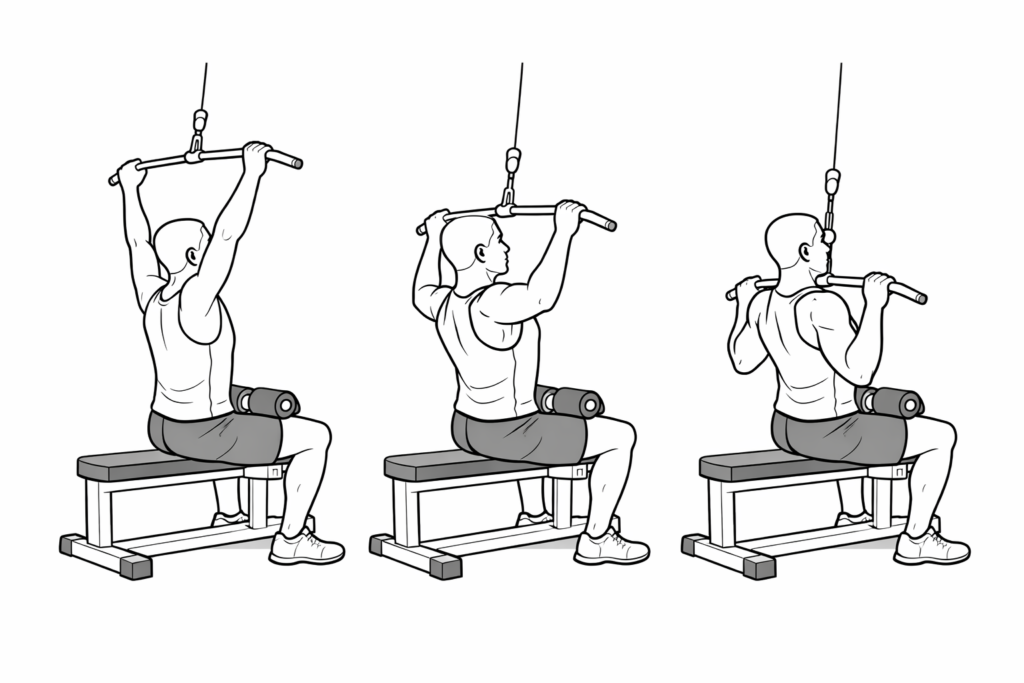
The seated lat pulldown is the best alternative to pull-ups, especially for beginners who are unable to perform a full pull-up.
Secure your legs firmly before starting the movement. Avoid excessive leaning backward or forward, as this can increase injury risk—particularly for those with limited shoulder mobility.
Focus on pulling with the back muscles, not the biceps or upper traps. Many beginners, especially office workers, struggle with overactive trapezius muscles.
If necessary, reduce the weight and focus on technique. Initiate the movement by depressing and retracting the shoulder blades, then pull down using the lats while keeping the traps and biceps relaxed.
Seated Cable Row
- 4 sets
- 12–15 reps
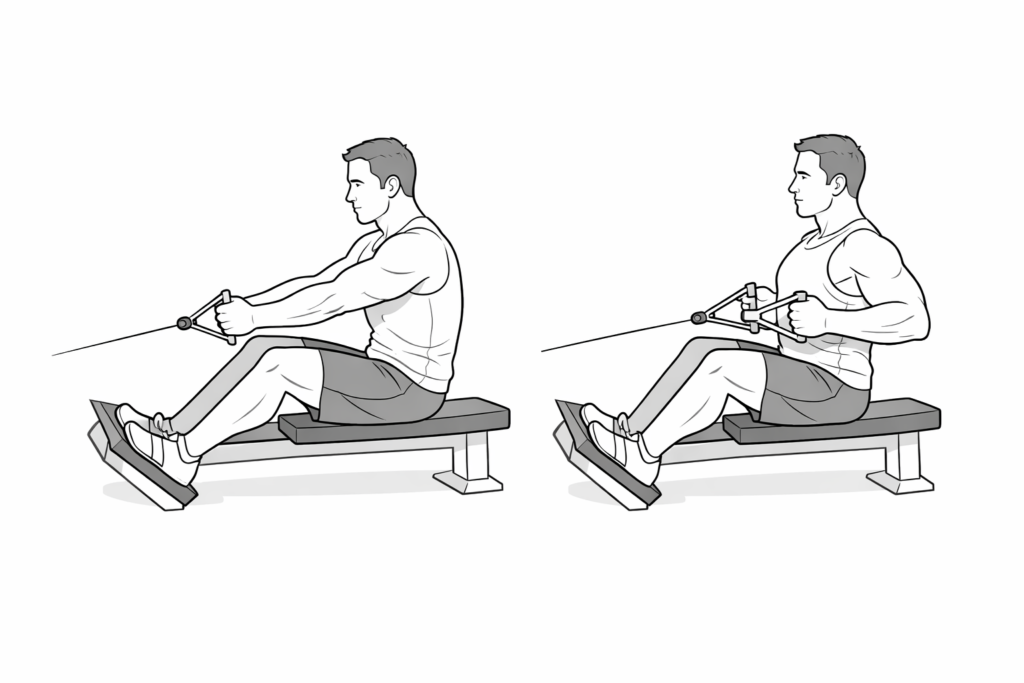
The same principle applies here: move the shoulder blades first, then pull with the back muscles.
Avoid leaning backward, as this reduces back activation and increases momentum. Both wide and narrow grips are possible. Since the outer lats are already emphasized earlier, a narrow grip is recommended here.
Plank Hold
- 2 sets
- 40–60 seconds per set
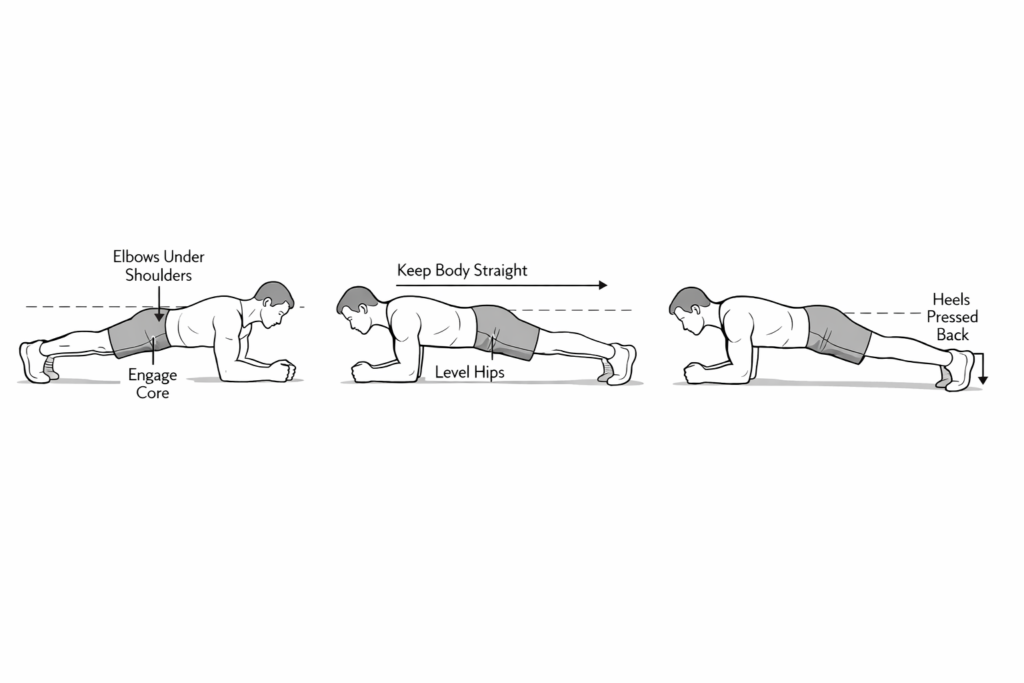
As discussed earlier, this trainee showed limited hip mobility and weak core strength. Planks were added to address these issues.
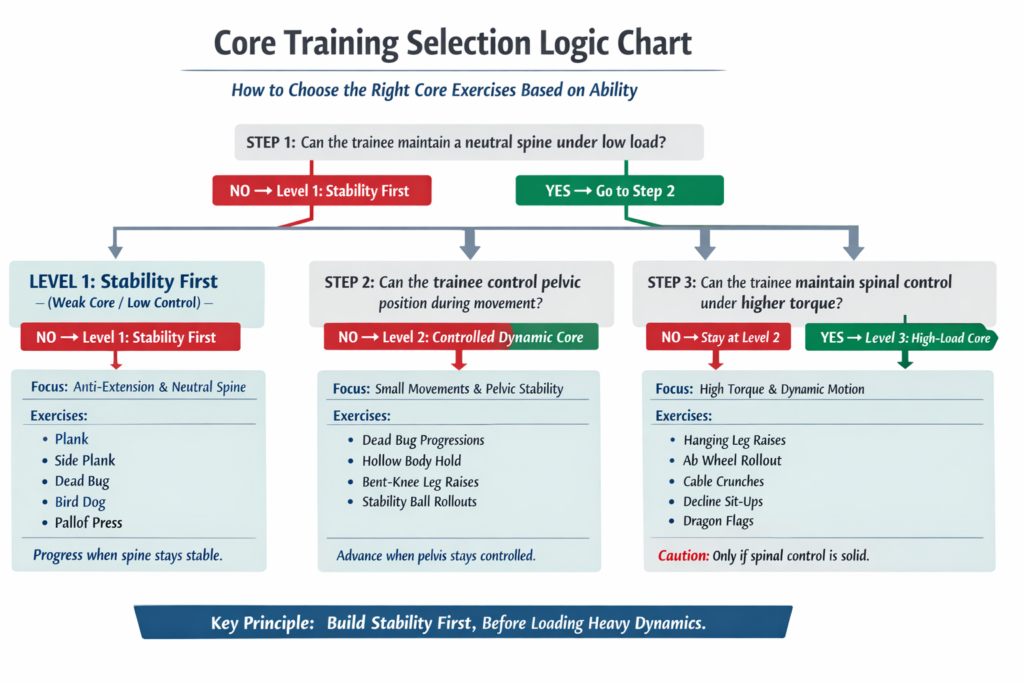
Yes—not crunches, not leg raises. For improving core stability, anti-extension isometric exercises like planks are far more effective.
Planks train the four deep core muscles—the transverse abdominis, multifidus, diaphragm, and pelvic floor—and help establish coordinated stability.
During the plank, keep the head lifted, avoid excessive hip elevation, and aim to maintain a straight line from shoulders to heels.
