

Many people wonder about the best time to hit the gym. Often, training time is “passively chosen,” depending on work, school, or family schedules. From what we’ve observed, most people prefer to weight train in the afternoon, followed by evenings, primarily among office workers. There are also those who start training before sunrise. But is there a scientific answer to the question: when is the best time of day to weight train?
Psychological and comfort aspects
From a comfort perspective, morning workouts can be a good choice. Early hours are usually quiet, giving you a sense of control and accomplishment by completing an important task first thing in the day. Studies also suggest that morning exercise can help suppress appetite, making it worth considering for fat loss programs.
Physiological perspective
Before artificial lighting, humans naturally followed the day-night cycle, guided by the suprachiasmatic nuclei (SCN) in the brain, often called the body’s internal “biological clock.” SCN neurons generate an approximately 24-hour rhythm even in complete darkness. Light reaching the retina signals the SCN, which adjusts various bodily functions, including temperature, melatonin, and hormones such as cortisol.
Hormones significantly affect weight training performance and post-workout protein synthesis.
Testosterone (T) and Cortisol (C)
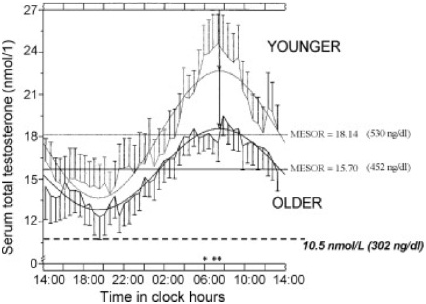
The first figure shows that testosterone levels in the human body peak around 6 a.m.
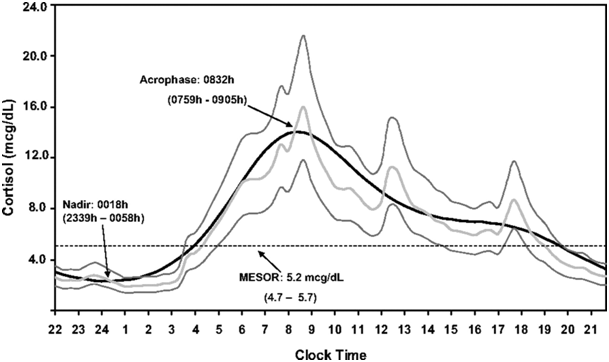
The second figure illustrates cortisol levels throughout the day. Cortisol reaches its highest point around 8 a.m., shortly after waking, and then gradually declines until late at night, when it begins to rise again during the early hours before dawn.
In sports medicine, the ratio of testosterone to cortisol (T/C ratio) is often used to assess whether an athlete is experiencing overtraining. The T/C ratio reflects the balance between anabolic and catabolic hormone activity during exercise and can help indicate metabolic trends and fatigue levels.
If an athlete’s T/C ratio drops significantly or remains consistently low, it may signal excessive fatigue or overtraining, and adjustments to the training plan or medical evaluation may be necessary. According to the two figures above, the T/C ratio tends to peak in the afternoon and evening.
It is important to note, however, that there is currently no conclusive evidence that training during the period of peak T/C ratio is definitively the best time for exercise.
The above data and images are from Interactions of cortisol, testosterone, and resistance training: Influence of circadian rhythms
Core body temperature
There is basically no controversy about what core temperature is optimal for training. Physiologically, higher core temperatures are more suitable for higher-intensity workouts. Core temperature usually refers to rectal temperature, located at the body’s internal center around the organs, with the body wall and skin surrounding it.
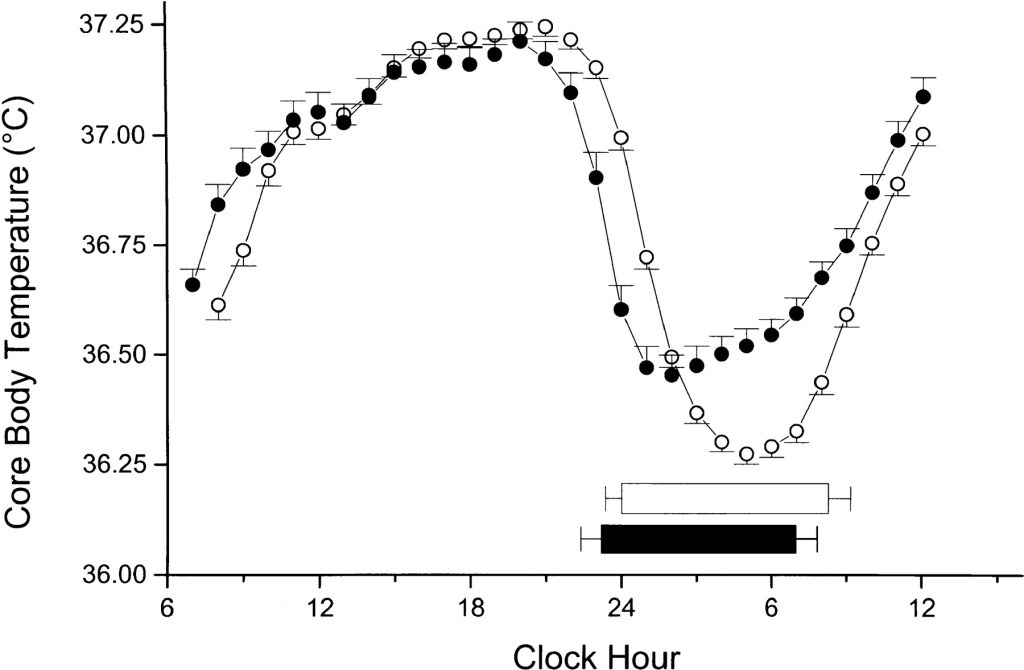
According to the chart above, core temperature gradually rises from around 6 a.m., peaks in the evening, and then begins to drop. Based on core temperature alone, the ideal training window would be from the afternoon to evening (roughly 2:00 p.m. to 8:00 p.m.).
Additionally, by this time, your joints are generally more mobile, having been active since you woke up.
Summary of Morning, Afternoon, and Evening Workouts
| Pros & Cons | Morning | Afternoon | Evening |
|---|---|---|---|
| Pros | – Highest testosterone levels – Easy to schedule – Boosts basal metabolic rate – Suppresses appetite – Gym is less crowded | – Highest core body temperature – Body energy is sufficient – Longer time since last meal | – High core body temperature – Body energy is sufficient – Joints are fully warmed up |
| Cons | – Lower core body temperature – Requires longer warm-up to avoid injury – Joints not fully mobilized | – Hard for most people to schedule workouts at this time | – May be too close to last meal – May be too alert, affecting sleep – Gym is crowded |
Overall Consideration
Looking at the bigger picture, the afternoon can be considered the optimal time of day for training. The main drawback, of course, is work commitments during this period.
After reviewing all these scientific findings, the reality is that your actual training time depends on what you can realistically fit into your daily life. Psychological factors should also be taken into account.
Just like studying, some people are most alert in the morning, while night owls can focus better in the evening. Everyone has their own peak periods of energy and motivation for exercise, so it’s best to train when it feels comfortable and sustainable for you. After all, relative to the physiological “ideal” suggested by research, the most important factor is consistency—training at a time you can stick with.
Do you know how quickly muscles start to atrophy when you stop working out?
Finally, for those who train in the afternoon or evening, a practical tip is to wait 1–2 hours after your last meal before starting your workout.